
Welcome
I am a PhD candidate in sociology at the University of Wisconsin–Madison. I research social class and political mobilization in Europe and the United States using quantitative and qualitative methods.
On this website you can find information about my research, publications, and CV.
CV →Research
My research investigates the relations between class structure and political mobilization. My publications are listed here →
Class structure
How should we measure the class structure of contemporary societies? Erik Olin Wright's "contradictory class locations" remains one of the most influential conceptual frameworks in class analysis. Yet it has rarely been implemented outside of Wright's own purpose-built surveys, leading researchers to adopt more readily available schemas.
My dissertation addresses this gap. I begin by tracing the operational convergence between Wright's exploitation-centered framework and Goldthorpe's employment relations approach, showing that successive revisions brought the two rival frameworks into operational alignment, despite their divergent theoretical commitments. On the basis of this convergence, I develop a reproducible crosswalk that reconstructs Wright's class locations from Britain's official NS-SEC occupational classifications—the product of Goldthorpe's framework—making Wright's schema usable with standard European survey data.
Using data from the British Election Study (BES), I subject the resulting schema to systematic validation, benchmarking it against widely used neo-Weberian alternatives. My results show that the revised schema performs comparably to established alternatives while retaining distinctions around exploitation and authority that other classifications collapse by design. The validated framework is applied to questions of left-populist mobilization in a chapter in Engaging Erik Olin Wright (Verso, 2024).
Populism and political mobilization
How does class structure shape political mobilization? Why do similar conditions of inequality produce such different political movements? My second research stream examines political responses to economic and institutional crisis, with a particular focus on the relations between class, populism and nationalism.
In a paper co-authored with Kristinn Már Ársælsson, I use latent class analysis to map the structure of anti-elite and nationalist sentiment in the United States, showing how these attitudes connect to vote choice across Democratic Party and Republican primaries. As Lead Researcher on Cluster III of the ENDURE project—a six-country survey experiment spanning the UK, US, Germany, Poland, Croatia, and Brazil—I am testing how economic inequality, immigration, cultural conflict, and institutional capture differentially generate populist, ethnonationalist, and authoritarian orientations. These phenomena are often conflated; the experiment is designed to isolate which conditions produce which responses, and how class position shapes these pathways.
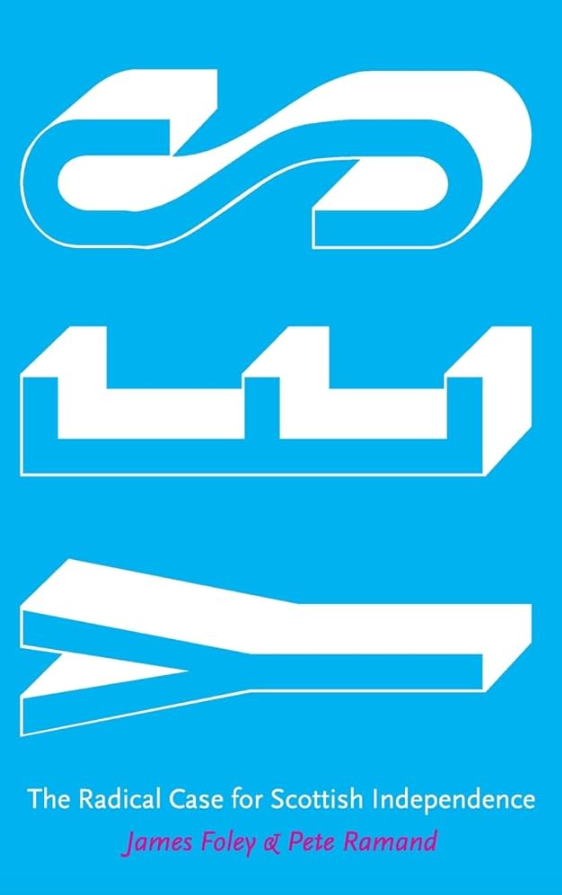
My interest in the class dynamics of mobilization also extends to the left. With James Foley, I co-authored Yes: The Radical Case for Scottish Independence (Pluto Press, 2014), analysing left-nationalist mobilization in Scotland. I have published on populism and democracy in the Socialist Register, and I am lead editor of a forthcoming volume on democratic socialism in global perspective, based on an international conference I organised at the University of Wisconsin–Madison in partnership with the Transnational Institute. A chapter in Engaging Erik Olin Wright (Verso, 2024) brings these two research streams together, developing a framework that integrates structural class analysis with theories of political articulation to study how movements construct—and fail to construct—cross-class coalitions for social transformation.
Books

Contact
Department of Sociology · University of Wisconsin–Madison